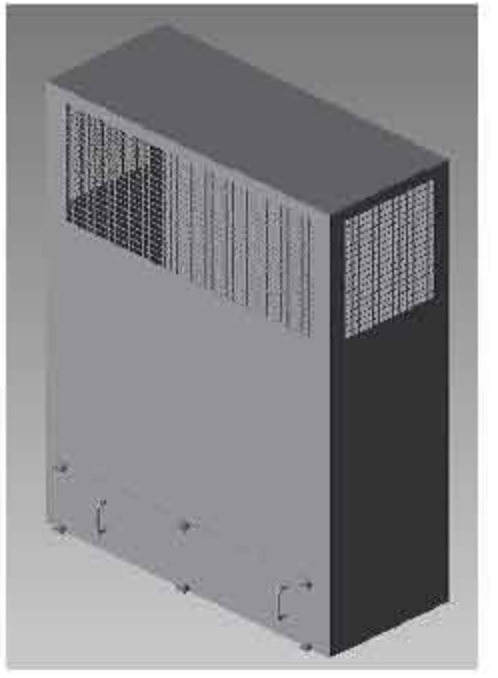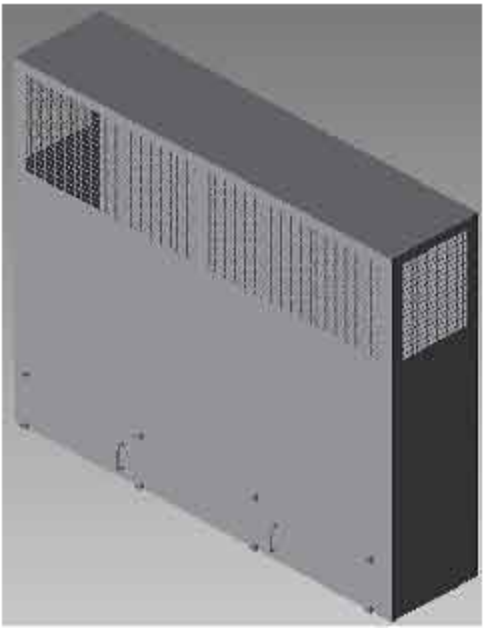

Passive Autocatalytic Recombiner, PAR
Feature Introduction
A passive autocatalytic recombiner (PAR) is a device that removes hydrogen from the containment vessel of a nuclear power plant during an accident. Its purpose is to prevent hydrogen explosions. Recombiners begin operating automatically as soon as the hydrogen concentration increases. They are passive devices, as they require no external energy to operate. Hydrogen can form during a nuclear accident if the reactor fuel overheats and the zirconium cladding of the fuel rods chemically reacts with steam. If hydrogen escapes from the reactor into the containment vessel, it can mix with air and form a flammable or even explosive mixture. A hydrogen explosion can lead to the destruction of the containment vessel and the release of radioactive materials into the environment. Recombiners are designed to remove hydrogen and prevent explosions. Inside the recombiner are plates or granules coated with a platinum or palladium catalyst. On the catalyst surface, hydrogen and oxygen molecules react chemically at low temperatures and low hydrogen concentrations. The reaction produces steam. The reaction begins spontaneously when the hydrogen concentration reaches 1–2 percent. Combustion of hydrogen in air requires a hydrogen concentration of at least 4 percent, and an explosion requires even higher concentrations. Therefore, the recombiner is capable of removing hydrogen from the containment vessel before reaching the concentration required for ignition. The recombiner is a box open at the top and bottom. The catalyst is located at the bottom of the box. The reaction of hydrogen and oxygen generates heat on the catalyst surface, and the temperature in the recombiner reaches hundreds of degrees Celsius. The hot vapor is lighter than the air in the containment vessel, creating a buoyant force inside the recombiner, similar to a chimney. This creates a strong air flow through the recombiner, which draws hydrogen and oxygen from the containment vessel into the device.
Finally, the exhaust gases are exhausted through the top of the recombiner. Natural convection circulation between the recombiner and the surrounding atmosphere effectively promotes mixing of the combustible gases and prevents hydrogen accumulation.